

Disorderly Conduct Lawyer in Greensboro, NC
Most disorderly conduct charges in North Carolina come down to something that was said. And the law is far narrower than the arrest suggests. The statute only reaches words likely to provoke immediate violence, and our appellate courts have thrown out cases that did not get close to that line.
What actually happened?
Tell us what you were doing and what you said. On this charge that is usually the whole case.
Sending this form does not make us your lawyer yet.
Disorderly conduct in North Carolina is a Class 2 misdemeanor under G.S. 14-288.4, with one exception for funerals that is far more serious.
It is not enough that someone was annoyed. The statute requires a "public disturbance," and that phrase has a legal definition that most people, and some officers, have never read.
If this was about something you said, the First Amendment is in the case. Our Supreme Court has limited the speech part of this statute to words likely to provoke immediate violence, and in 2025 the Court of Appeals threw out both a protest conviction and the resisting charge that came with it.
- What disorderly conduct actually is
- When words are not a crime
- What you are really facing
- The resisting charge that comes with it
- The charges people get instead
- UNCG, NC A&T and the campus subsections
- Getting it off your record
- How we defend these cases
- What a disorderly conduct lawyer costs in Greensboro
- How to choose a lawyer for this charge
- Our criminal defense team
- What clients say
- Where we practice
- Questions people ask us
What disorderly conduct actually is
The statute opens by saying disorderly conduct is “a public disturbance intentionally caused” by a person who does one of nine specific things. Both halves matter. Without a public disturbance there is no offense, whatever else happened.
And “public disturbance” is defined, in G.S. 14-288.1(8):
“Any annoying, disturbing, or alarming act or condition exceeding the bounds of social toleration normal for the time and place in question which occurs in a public place or which occurs in, affects persons in, or is likely to affect persons in a place to which the public or a substantial group has access.”
Read the bolded part again. The standard is comparative and contextual. The same volume and the same language are measured against a different baseline at one in the morning in an entertainment district than in a library on a Tuesday. That is not a loophole, it is what the legislature wrote, and it is the single most useful sentence on this page.
Note also that the definition reaches “apartment houses” and “any neighborhood”. Being on private property is not on its own an answer.
The nine ways to commit it:
| Subsection | What It Covers |
|---|---|
| (a)(1) | Fighting or other violent conduct, or conduct creating the threat of imminent fighting or other violence. |
| (a)(2) | An utterance, gesture, display or abusive language “which is intended and plainly likely to provoke violent retaliation and thereby cause a breach of the peace.” This is the speech subsection and it is the one most people are charged under. |
| (a)(3) | Taking possession of or seizing a building of a public or private educational institution without authority. |
| (a)(4) | Refusing to vacate a building of an educational institution after an order from a named official, a fireman, a public health officer, or during an emergency a law enforcement officer. |
| (a)(5) | After being forbidden, sitting or lying to obstruct a doorway, or congregating so as to interfere with the normal use of a building. |
| (a)(6) | Disrupting the teaching of students, or disturbing the peace, order or discipline at an educational institution or the grounds next to it. |
| (a)(6a) | Disturbing the peace, order or discipline on a public school bus or activity bus. Almost every page on this topic leaves this one out. |
| (a)(7) | Disrupting a religious service or assembly. |
| (a)(8) | Interfering with a funeral or memorial service, with specific conduct listed within 500 feet and a window of two hours either side. |
A correction worth making. There is no enhanced penalty for disorderly conduct at a school or a government building. Several pages say there is. The only escalation written into this statute is for funerals, under (a)(8), which is a Class 1 misdemeanor for a first offense, a Class I felony for a second and a Class H felony for a third or later.
When words are not a crime
This is where most of these cases are actually decided, and no other firm page in this market covers it.
Subsection (a)(2) looks broad on paper. It is not, because the First Amendment does not allow it to be. In State v. Summrell (1972) the North Carolina Supreme Court upheld (a)(2) only as narrowed by construction, limited to words likely to provoke ordinary people to immediate violence. The subsection does not reach what its text literally appears to say.
Three decisions worth knowing about:
| Case | What Happened | What the Court Held |
|---|---|---|
| State v. Ellis N.C. Supreme Court, 2020 |
A passenger made a middle finger gesture at a trooper from a passing car. | The gesture on its own did not provide reasonable suspicion that the person intended to, or was plainly likely to, provoke violent retaliation. The trooper did not even have grounds to stop the car. |
| State v. Barthel N.C. Court of Appeals, November 2025 |
A man held a banner insulting a commissioner at a county meeting and refused an order to lower it. | Both convictions reversed. The silent protest was protected speech, the banner was not fighting words, and criticism of public officials is core political speech. Because the arrest was unlawful, the resisting conviction fell with it. |
| State v. Humphreys N.C. Court of Appeals, 2020 |
A woman cursed at officers during a dog sniff. | She was “merely remonstrating.” Verbal abuse alone does not amount to resisting, delaying or obstructing. The same conduct in a school parking lot was also held not to be a substantial disruption. |
The federal line is the same. Under the fighting words doctrine the words have to be a personal insult directed at an individual and likely to provoke an immediate violent response. The Fourth Circuit has held that even egregious slurs are not fighting words on their own where there was no likely or actual immediate violent reaction. And courts have repeatedly said a trained officer is expected to show more restraint than an average person, which makes words directed at police harder, not easier, for the State.
We will also tell you the other side. State v. Cunningham (1977) upheld a conviction where a defendant cursed a parking officer repeatedly and nearly drove into him, and the UNC School of Government notes that decision is arguably out of step with modern cases. And in In re T.T.E. (2019) our Supreme Court held that throwing a chair toward another student was violent conduct under (a)(1) even though nobody was hit. Knowing the cases that cut against you is part of the job.
One procedural point that costs people the argument. A First Amendment challenge can be raised by a pretrial motion to dismiss. But G.S. 15A-1444(a2) generally means that if you plead guilty afterwards, the denial of that motion cannot be taken up on appeal. The order in which things happen matters here, and it is a reason to have a lawyer before the plea, not after.
What you are really facing
Disorderly conduct is a Class 2 misdemeanor. Misdemeanor sentencing runs on the chart in G.S. 15A-1340.23, and what the chart authorizes depends on your prior convictions.
| Prior Conviction Level | Range for a Class 2 | What the Grid Authorizes |
|---|---|---|
| Level I No prior convictions |
1 to 30 days | Community punishment only. Where the grid requires community punishment, G.S. 15A-1340.20(c) requires the court to suspend a sentence of imprisonment. Staying in that band is argued, not handed over. |
| Level II One to four priors |
1 to 45 days | Community or intermediate punishment. |
| Level III Five or more priors |
1 to 60 days | Community, intermediate or active. The “up to 60 days” figure quoted on most websites is this row, not a first offender’s. |
The maximum fine for a Class 2 misdemeanor is $1,000, and court costs are on top of that and set separately.
The number that is almost never mentioned is the first row. If you have no record, the grid does not authorize an active sentence for this charge at all. That does not mean the charge is nothing. A Class 2 misdemeanor conviction is still a criminal record, and the record is usually what the person was worried about in the first place.
Was this about something you said?
Then the case may be narrower than the arrest made it look. Tell us what happened and what was said, and we will tell you where the line falls.
Call (336) 379-0539Free consultation, answered 24/7The resisting charge that comes with it
Disorderly conduct rarely arrives alone. The usual companion is resisting, delaying or obstructing a public officer under G.S. 14-223, and most pages describe it as a flat Class 2 misdemeanor. That has not been the whole picture since 2021.
| The Conduct | The Class |
|---|---|
| Willfully resisting, delaying or obstructing an officer in an official duty | Class 2 misdemeanor |
| Where that is the proximate cause of an officer’s serious injury | Class I felony |
| Where that is the proximate cause of an officer’s serious bodily injury, as the statute defines it | Class F felony |
Two things worth knowing. Verbal abuse on its own is not this offense, as Humphreys held. And where the underlying arrest was unlawful, as in Barthel, the resisting charge can fall with it.
The charges people get instead
Several different statutes cover conduct people call disorderly, and which one you are charged under changes the class.
| Statute | Class | What It Covers |
|---|---|---|
| G.S. 14-444 Intoxicated and disruptive in public |
Class 3 misdemeanor | Intoxication alone is not a crime in North Carolina. The statute requires being intoxicated and one of five listed acts: blocking traffic, blocking a sidewalk or entrance, grabbing or fighting, cursing or shouting at others, or begging. |
| G.S. 14-132 Disorderly conduct in public buildings |
Class 2 misdemeanor | Rude or riotous noise in or near a public building. Note that the statute gives the person in charge of the building authority to arrest summarily and without warrant, and the definition reaches private charitable and educational institutions open to the public. |
| G.S. 14-275.1 At a bus or rail station or airport |
Class 3 misdemeanor | Disorderly conduct, vulgar or profane language, or loitering after being asked to leave, at a bus depot, rail station or airport. In Greensboro that covers the Galyon Depot and Piedmont Triad International. |
| G.S. 14-288.5 Failure to disperse |
Class 2 misdemeanor | Failing to comply with a lawful command to disperse. Remaining after a reasonable time is prima facie evidence of taking part, which is a real evidentiary shortcut and worth understanding. |
A Class 3 misdemeanor at Level I carries 1 to 10 days and a fine capped at $200, and with three or fewer prior convictions G.S. 15A-1340.23(d) makes the judgment a fine only.
A city noise ordinance is a separate thing again and is not this statute. If the charge on your paperwork is a municipal ordinance violation, say so on the first call, because it changes the answer.
UNCG, NC A&T and the campus subsections
Five of the nine subsections are about educational institutions, and Greensboro has two universities with sworn campus police departments. If your charge came out of a campus incident, the specific subsection matters.
Subsection (a)(4) is unusually precise about whose order triggers the offense. For colleges and universities the statute names the vice chancellor for student affairs or the equivalent, the dean of students or the equivalent, the director of the campus law enforcement or security department, and the chief of that department. An order from somebody else is not the same thing.
Subsection (a)(6), disrupting teaching, has a requirement the statute does not state but the courts have built into it: the disruption has to be substantial. North Carolina appellate courts have found these insufficient:
- Tapping a radiator and lunging at a student
- Talking loudly in class after being told to stop
- Talking during a test, slamming a door and begging not to be sent to the office
- Walking and giggling in a hallway during class, then running from an official
- Cursing at officers in a school parking lot
There is also an open constitutional question. In 2023 the Fourth Circuit, whose decisions bind federal courts in North Carolina, affirmed that South Carolina’s comparable school disorderly conduct statutes were void for vagueness. The UNC School of Government has compared that struck language to North Carolina’s (a)(6) and suggested the substantial disruption gloss may not be enough to answer a vagueness challenge. Nobody else in this market has noticed it.
Getting it off your record
This is usually the real question behind the charge, and there is good news in the statute that very few pages mention.
If the charge is dismissed or you are found not guilty, it comes off by itself. G.S. 15A-146(a4) provides for automatic expunction of dismissals and not guilty findings for cases disposed of on or after 1 December 2021, generally within 180 to 210 days, with no petition and no fee. Check a background check afterwards rather than assuming, and if it is still showing after a year, something has gone wrong and it needs chasing.
Two other routes, both statutory and both requiring the prosecutor to agree:
- Deferred prosecution and conditional discharge under G.S. 15A-1341. Both end without a conviction if the conditions are met. Both need the District Attorney’s agreement and a joint motion, there are statutory findings the court has to make, and a prior period of probation disqualifies you.
Neither is a program you sign up for. They are negotiated, and the negotiation happens before anybody stands up in court.
How we defend these cases
- Was there a public disturbance at all? Measured against what is normal for that time and that place. This is an element, and the State has to prove it rather than assert it.
- If this was speech, does it reach the line? The subsection only covers words intended and plainly likely to provoke violent retaliation. Offensive is not the test. Loud is not the test.
- Who did the officer say it was directed at? In Ellis the fact that the trooper did not know who the gesture was aimed at mattered to the outcome.
- Was the stop or the arrest lawful? If not, what followed is in trouble, including the resisting charge.
- Was the right subsection charged? Nine subsections, four nearby statutes and three different classes. Charging documents get this wrong.
- Is a dismissal or a deferral realistically in play? On a first charge this is usually worth more than a trial win, because of what it does to the record.
What a disorderly conduct lawyer costs in Greensboro
We quote a flat fee for the stage of the case you are in and you get the number on the first call.
What moves it: whether there is a companion resisting or assault charge, whether there is body camera or phone video to review, whether a First Amendment motion is worth filing, and whether we are pursuing a negotiated dismissal rather than a plea. A single Class 2 charge with no companion is a different piece of work from a protest or campus case with three charges and video.
How to choose a lawyer for this charge
North Carolina State Bar rules do not permit any lawyer to claim to be the best, so ask questions with exact answers instead:
- “Which subsection am I charged under?” There are nine, and they are not interchangeable.
- “Does the grid authorize active time at my prior conviction level?” On a Class 2 at Level I it does not, and a lawyer should know that without checking.
- “Is there a First Amendment argument here, and when does it have to be made?” Before any plea, for the reason set out above.
- “If it is dismissed, do I have to do anything to clear it?” Generally not since December 2021, but they should know that and know how to check it afterwards.
Our criminal defense team

Jason Aycoth
Criminal Defense, Misdemeanor and Felony Charges
Jason handles criminal cases in state and federal court across North Carolina. He has served as Editor of the True Bill and was Commencement Speaker at Elon Law School's graduation.
- Former President, Greensboro Criminal Defense Lawyers Association
- Elected member, Criminal Justice Section, North Carolina Bar Association
- Selected to present the Wade M. Smith Award for Top Criminal Defense Lawyer in North Carolina
 Chad D. GarrettFounderJason AycothPartner
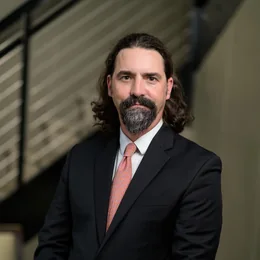 Sean OlsonPartner
 Brandon GoldsboroughCriminal Defense
 Stephanie GoldsboroughCriminal Defense
 Rebecca ElliottCriminal Defense
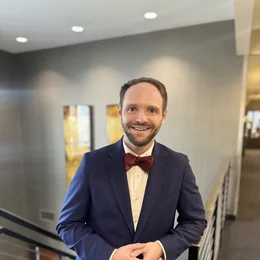 Patrick BidwellCriminal Defense
 Samantha HeplerCriminal Defense
What clients say
4.9 out of 5 from 587 Google reviews. A few recent ones:


Where we practice
Our office is two minutes from the Guilford County Courthouse.
Guilford County: Greensboro · High Point · Jamestown · Gibsonville · Summerfield · Oak Ridge · Pleasant Garden · Stokesdale · Whitsett · McLeansville · Sedalia
Also serving: Randolph, Forsyth, Alamance, Rockingham and Davidson Counties
Questions people ask us
How do I find the best disorderly conduct lawyer in Greensboro?
No lawyer in North Carolina may claim to be the best, under State Bar rules. Ask which of the nine subsections you are charged under, whether the sentencing grid authorizes active time at your prior conviction level, and whether there is a First Amendment argument and when it has to be made. Those have exact answers.
Is disorderly conduct a misdemeanor in NC?
Yes. It is a Class 2 misdemeanor under G.S. 14-288.4(b). The one exception is conduct interfering with a funeral under subsection (a)(8), which is a Class 1 misdemeanor for a first offense, a Class I felony for a second and a Class H felony for a third or later.
What counts as a public disturbance?
G.S. 14-288.1(8) defines it as any annoying, disturbing or alarming act exceeding the bounds of social toleration normal for the time and place in question, in a public place or somewhere the public has access. The time and place part is the key. The standard shifts with the setting.
Can I be charged for swearing at a police officer?
Charged, yes. Convicted is a different question. The statute reaches words intended and plainly likely to provoke violent retaliation, and courts have repeatedly held that a trained officer is expected to show more restraint than an average person. In one 2020 case our Supreme Court held that a middle finger gesture at a trooper did not even justify the stop.
Is yelling in public a crime in North Carolina?
Not on its own. There has to be a public disturbance exceeding what is normal for that time and place, and one of the nine things the statute lists. Volume alone is not the test, and a city noise ordinance is a separate matter from this statute entirely.
Is being drunk in public a crime in NC?
No. Intoxication alone is not an offense. G.S. 14-444 requires a person to be intoxicated and doing one of five specific things: blocking traffic, blocking a sidewalk or entrance, grabbing or shoving or fighting, cursing or shouting at others, or begging. It is a Class 3 misdemeanor.
Will I go to jail for disorderly conduct?
For a Class 2 misdemeanor at Prior Conviction Level I, meaning no prior convictions, the sentencing grid authorizes community punishment only, and where the grid requires community punishment the court must suspend a sentence of imprisonment. Which level you are sentenced at, and whether the charge survives at all, is argued rather than assumed.
What is the maximum fine?
$1,000 for a Class 2 misdemeanor. Court costs are separate and are set outside this statute. For a Class 3 misdemeanor the cap is $200, and with three or fewer prior convictions the judgment is a fine only.
They charged me with resisting as well. What is that?
Resisting, delaying or obstructing a public officer under G.S. 14-223, a Class 2 misdemeanor, with felony tiers added in 2021 where the conduct is the proximate cause of an officer's serious injury or serious bodily injury. Verbal abuse alone is not this offense, and where the underlying arrest was unlawful the resisting charge can fall with it.
I was charged at a protest. Does that change anything?
It can change a great deal. In November 2025 the Court of Appeals reversed both a disruption conviction and the companion resisting conviction where a man held a protest banner at a public meeting, holding that the silent protest was protected speech and that criticism of public officials is core political speech. Those arguments have to be made properly and before any plea.
This happened on campus. Is that different?
Five of the nine subsections concern educational institutions, and the subsection about refusing to vacate names the specific officials whose order counts. For disrupting teaching, the courts have read in a requirement that the disruption be substantial, and they have found conduct such as talking loudly in class, slamming a door, or cursing in a parking lot insufficient.
Will a dismissal stay on my record?
Generally not. G.S. 15A-146(a4) provides for automatic expunction of dismissals and not guilty findings for cases disposed of on or after 1 December 2021, usually within 180 to 210 days, with no petition and no fee. Run a background check on yourself a few months later to confirm it actually happened.
Talk to a Greensboro disorderly conduct lawyer
Tell us what happened and what was said. On this charge that is usually the whole case. Free, and no obligation.
Garrett, Walker, Aycoth & Olson, Attorneys at Law
317 South Greene St, Greensboro, NC 27401
(336) 379-0539 · answered live, 24 hours
Free consultation · Se habla español
This page explains North Carolina law in general terms as of October 2026. It is not legal advice about your case, and penalties and statutes change. Figures come from N.C.G.S. 14-288.4, 14-288.1, 14-288.5, 14-132, 14-223, 14-275.1, 14-444, 15A-146, 15A-1340.20, 15A-1340.23, 15A-1341 and 15A-1444. Case summaries are drawn from the UNC School of Government, covering State v. Summrell (1972), State v. Cunningham (1977), State v. Ellis (2020), State v. Humphreys (2020), In re T.T.E. (2019) and State v. Barthel (2025).