

DWI Substance Abuse Assessments in High Point and Greensboro
After a DWI in North Carolina your revocation does not end on a date. It ends when the DMV receives a certificate of completion. Here is what the assessment is, what it costs, what decides whether you get a class or treatment, and why doing it early is worth more than people realize.
Where are you in the process?
Charged, convicted, or trying to get the license back. Each one changes what you should do next.
Sending this form does not make us your lawyer yet.
The assessment is not optional and it is not a formality. G.S. 20-17.6(b) says the Division must receive a certificate of completion before it can restore your license, and that the revocation period is extended until it does.
Doing it before sentencing is worth something concrete. Voluntary submission for assessment, and following the recommendation, is a statutory mitigating factor at DWI sentencing. Most people do it afterwards and get nothing for it.
Whether you get a class or treatment is decided by a three part test in the statute, not by anyone's opinion. You can work out the answer yourself before you walk in. The table below shows how.
- What the assessment actually involves
- Class or treatment: the three part test
- The five levels, and the hours
- What it costs, by statute
- Where to get one in High Point
- When to do it, and why early matters
- What happens after you finish
- What a lawyer does with this
- Our DWI and traffic team
- What clients say
- Where we practice
- Questions people ask us
What the assessment actually involves
G.S. 122C-142.1 sets it out. There are two required components and two required record checks.
| Component | What It Means |
|---|---|
| A clinical interview | Face to face with a qualified counselor, in a licensed facility. NCDHHS permits this in person or by telehealth with both audio and video. |
| A standardized test | A test approved by the Department, used to help determine chemical dependency. |
| Your complete driving record | The assessor must review it. You will need to obtain it from the DMV before you go. |
| The alcohol concentration at arrest | The assessor has to verify it, which is why your court papers have to come with you. |
Only certain people may conduct one. G.S. 122C-142.1(b1) lists them: a Certified Substance Abuse Counselor, a counselor holding the LCAS licensed clinical addiction credential, a person licensed by the North Carolina Medical Board or the Psychology Board, or a physician certified by the American Society of Addiction Medicine.
Turn up without the driving record or the court paperwork and you will usually be sent away to come back, which costs a week you may not have.
Class or treatment: the three part test
This is the question everyone wants answered and the statute answers it directly. G.S. 122C-142.1(c) says attendance at an alcohol and drug education traffic school is required if none of the following applies, and a treatment program is required if any of them does.
| Trigger | If This Is True, It Is Treatment |
|---|---|
| 1 | A chemical test at the time of the offense showed an alcohol concentration of 0.15 or more at any relevant time after driving. |
| 2 | You have a prior conviction of an offense involving impaired driving. |
| 3 | The assessment identifies a substance abuse disability. |
The administrative rules add one more condition for the education route that catches people out: the person must not have refused to submit to a chemical test. Refusing at the roadside does not just create a license problem, it also moves you from a 16 hour class to a treatment program.
The five levels, and the hours
North Carolina’s rules set five categories of service. The hours below come from the official North Carolina Administrative Code.
| Level | Service | Minimum Required |
|---|---|---|
| I | Alcohol and Drug Education Traffic School, ADETS | Not less than 16 hours of classroom instruction. No session may run more than three hours in a day, and classes are capped at 20 people. |
| II | Short term outpatient treatment | 20 contact hours over at least 30 days, scheduled weekly. |
| III | Longer term outpatient treatment | 40 contact hours over at least 60 days, scheduled weekly. |
| IV | Day treatment or intensive outpatient | 90 contact hours over at least 90 days. |
| V | Inpatient or residential treatment | A required minimum 90 day time frame. |
A number to be careful with. A version of the rules published as a PDF shows an unresolved edit that reads “ten 16 hours” for ADETS. The authoritative Administrative Code says 16 hours. Anyone quoting you ten hours is reading the wrong document.
The curriculum used in ADETS across North Carolina is PRIME for Life, according to NCDHHS.
What it costs, by statute
These are not provider prices. They are set in G.S. 122C-142.1(f).
| What You Pay | Amount |
|---|---|
| The assessment, to the assessing agency | $100 |
| ADETS, to the school | $160 |
| Treatment, to the treatment facility | $75 |
The same statute says an area facility may not deny a service to a person because the person is unable to pay. That sentence matters and almost nobody knows it is there.
Treatment beyond the statutory fee has real out of pocket costs on top. NCDHHS publishes averages of roughly $409 for short term outpatient and $668 for longer term outpatient. Those are departmental averages rather than set rates.
If more than one certificate of completion is required, the statute says you pay the assessment fee for each certificate, but the facility conducts only one assessment and recommends only one school or program, and you pay the school or treatment fee once.
Not sure whether you are looking at a class or a program?
The reading, your record and the refusal question decide it, and all three are usually known before you walk in. Tell us and we will tell you what to expect.
Call (336) 379-0539Free consultation, answered 24/7Where to get one in High Point
Only a facility authorized by the Department of Health and Human Services can produce a valid certificate of completion. The authoritative list is the NCDHHS authorized provider list, which lets you search by county.
Check the list before you pay anybody. Providers are added and lapse, and an assessment completed somewhere that is not currently authorized will not produce a certificate the DMV can use. We deliberately do not hard code provider names on this page for that reason. Search Guilford County on the official list, or call us and we will check it with you.
Two practical points from the rules. If treatment is required, the assessor must tell you in writing what other facilities in the county provide that level of service, both private and public. And transferring your case to another provider inside North Carolina is free: the rules say there is no charge for providing those documents in state.
When to do it, and why early matters
There is no single deadline. There are several moments where the assessment does different work, and the order matters.
- Before sentencing, voluntarily. G.S. 20-179(e)(6) makes voluntary submission for assessment, and participation in the recommended treatment, a mitigating factor at DWI sentencing. There is a separate mitigating factor for completing the assessment, complying with it and maintaining 60 days of monitored abstinence. This is the single best reason to go early and it is free to take advantage of.
- During the 30 day civil revocation. The assessment is one of the conditions for a limited driving privilege from that revocation.
- Before applying for a privilege after conviction. It must be obtained and filed with the court.
- As a condition of probation. At every sentencing level the judge must order the assessment and the education or treatment required for restoration.
- For restoration. No deadline, just an open ended extension of the revocation until the certificate arrives.
The trap at the end. G.S. 20-17.6(e) says a person is not eligible for a limited driving privilege once the revocation period has ended and the license stays revoked only because the Division has not received the certificate. Delay long enough and you lose the stopgap exactly when you need it.
What happens after you finish
Finishing is not the same as being restored. The rules require the original certificate of completion to be forwarded to the state within two weeks of completing all services. The Department then reviews it for accuracy and completeness and forwards it to the DMV. If it is inaccurate or incomplete, it goes back to the facility.
That review step is where people lose months without knowing it. Keep your copy, note the date it was sent, and check that the DMV actually has it rather than assuming.
What a lawyer does with this
Most of the assessment process is yours to complete and we will tell you that honestly. Where a lawyer earns the fee is in the timing and the use made of it.
- Getting the assessment done before sentencing so it counts as a mitigating factor rather than a condition imposed afterwards.
- Filing it with the court properly so the privilege application is not delayed.
- Checking that the certificate actually reached the DMV, and chasing it when it did not.
- Working out whether the reading, the record or a refusal is going to push you into treatment, so you are not surprised by a 90 day program.
Our DWI and traffic team

Chad D. Garrett
DWI, Traffic Law, Criminal Defense
Chad started the firm and defends criminal cases in state and federal court. He wrote ABC's of Traffic Law, ABC's of DWI and DWI Essentials.
- Continuing Legal Education Instructor of the Year, North Carolina Bar Association
- Former President, Greensboro Criminal Defense Lawyers Association
- Board Member, Criminal Justice Section, North Carolina Bar Association
 Chad D. GarrettFounder
 Jason AycothPartner
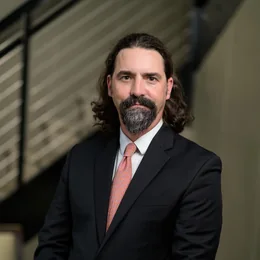 Sean OlsonPartner
 Brandon GoldsboroughCriminal Defense
 Stephanie GoldsboroughCriminal Defense
 Rebecca ElliottCriminal Defense
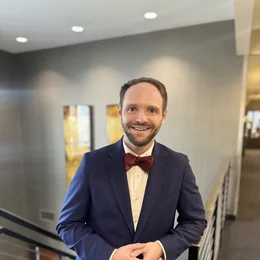 Patrick BidwellCriminal Defense
 Samantha HeplerCriminal Defense
What clients say
4.9 out of 5 from 587 Google reviews. A few recent ones:


Where we practice
Our office is two minutes from the Guilford County Courthouse.
Guilford County: Greensboro · High Point · Jamestown · Gibsonville · Summerfield · Oak Ridge · Pleasant Garden · Stokesdale · Whitsett · McLeansville · Sedalia
Also serving: Randolph, Forsyth, Alamance, Rockingham and Davidson Counties
Questions people ask us
What is a DWI substance abuse assessment in North Carolina?
It is a required step before your license can be restored after a DWI. G.S. 122C-142.1 requires a face to face clinical interview plus an approved standardized test, and the assessor must review your complete driving record and verify the alcohol concentration at arrest. Based on it, you are recommended for either an education school or a treatment program.
What does the assessment cost?
The fees are set by statute, not by the provider. The assessment is $100, ADETS is $160, and the fee to a treatment facility is $75. The same statute says an area facility may not deny a service because the person cannot pay. Treatment beyond the statutory fee has further costs and NCDHHS publishes averages.
How do I know if I need the class or treatment?
G.S. 122C-142.1(c) sets a three part test. You go to treatment if any one of these applies: a chemical test showed 0.15 or more, you have a prior conviction of an offense involving impaired driving, or the assessment identifies a substance abuse disability. If none applies, the education school is the route. The rules add that refusing a chemical test also moves you to treatment.
How long is ADETS?
Not less than 16 hours of classroom instruction under the Administrative Code, with no session running more than three hours in a day and class size capped at 20. A rules document circulating as a PDF shows an unresolved edit reading "ten 16 hours"; the authoritative code says 16.
How long is treatment?
It depends on the level. Short term outpatient is a minimum of 20 contact hours over at least 30 days. Longer term outpatient is a minimum of 40 contact hours over at least 60 days. Day or intensive outpatient is 90 contact hours over at least 90 days. Inpatient or residential has a required minimum 90 day time frame.
Where can I get an assessment in High Point?
Only from a facility authorized by the Department of Health and Human Services. The authoritative source is the NCDHHS provider list, searchable by county. We do not publish provider names here because the list changes, and an assessment done somewhere no longer authorized will not produce a usable certificate. Check the official list first, or call us and we will check it with you.
Can I do the assessment by telehealth?
NCDHHS states the required face to face interview may be conducted in person or by telehealth with both audio and video. Not every provider offers it, so confirm before booking.
When should I do it?
Earlier than most people do. G.S. 20-179(e)(6) makes voluntary submission for assessment and participation in the recommended treatment a mitigating factor at sentencing, so doing it before court can count for something. Afterwards it is simply a condition you have to satisfy.
My revocation period has ended. Why is my license still revoked?
Most likely because the DMV has not received the certificate of completion. G.S. 20-17.6(b) says the revocation period is extended until it does, so the calendar date does not end the revocation on its own.
Can I get a limited driving privilege while I finish the assessment?
During the revocation period, potentially. Afterwards, no. G.S. 20-17.6(e) says a person is not eligible for a limited driving privilege once the revocation period has ended and the license remains revoked only because the Division has not received the certificate.
What do I need to bring?
Your court papers and your complete driving history from the DMV. The assessor is required to review the driving record and to verify the alcohol concentration at the time of arrest, so without them the appointment usually cannot go ahead.
Can I change providers?
Yes, and within North Carolina it should not cost you. The rules say there is no charge for providing the transfer documents in state, and NCDHHS states a provider may not charge a fee to transfer your case to another in state provider.
Talk to a Greensboro or High Point DWI lawyer
Tell us where you are in the process and what the reading was. Free, and no obligation.
Garrett, Walker, Aycoth & Olson, Attorneys at Law
317 South Greene St, Greensboro, NC 27401
(336) 379-0539 · answered live, 24 hours
Free consultation · Se habla español
This page explains North Carolina law in general terms as of October 2026. It is not legal advice about your case, and penalties and statutes change. Figures come from N.C.G.S. 122C-142.1, 20-17.6, 20-179 and 20-179.3, the North Carolina Administrative Code at 10A NCAC 27G .3800, and the published pages of the North Carolina Department of Health and Human Services. Statutory fees were checked in October 2026 and provider authorization should always be confirmed on the NCDHHS list.