

U Visa Lawyer in Greensboro, NC
A U visa can lead to work authorization, protection for your family, and after three years a green card. None of that happens automatically. Call (336) 379-0539 to have Sean Jeffcoat review your situation before you request a certification or file anything with USCIS.
Tell us what happened
Sending this form does not make us your lawyer yet.
A U visa is temporary immigration status for victims of serious crimes who have helped, or are likely to help, the police or prosecutors. Your petition needs a certification signed by a law enforcement official, prosecutor or judge, and that certification must be signed within the six months before you file. A U visa lawyer gets that certification requested correctly and builds the rest of the case around it.
- What a U Visa Lawyer Does for You
- Who Qualifies for a U Visa
- Crimes That Can Support a U Visa
- The Certification: Form I-918, Supplement B
- Family Members You Can Include
- The 10,000 Cap and the Waiting List
- Criminal Record or Past Immigration Problems: The Waiver
- Your Information Is Protected by Federal Law
- Already in Removal Proceedings?
- From U Visa to Green Card
- Why Timing Matters
- What a U Visa Lawyer Costs
- How to Choose a U Visa Lawyer in Greensboro
- Your attorney
- What clients say
- Where we practice
- Questions people ask
What a U Visa Lawyer Does for You
- Checks whether the crime qualifies. The list in 8 U.S.C. 1101(a)(15)(U)(iii) is specific, and “any similar activity” has to be argued with facts.
- Requests the certification. We prepare the request for Form I-918, Supplement B, so the certifying official can see what you reported and how you helped.
- Documents the harm. You must show “substantial physical or mental abuse”. We gather medical, counseling and personal evidence that fits the factors USCIS weighs under 8 CFR 214.14(b)(1).
- Files for your family. Qualifying relatives go on Form I-918, Supplement A.
- Handles the waiver. If you have an arrest, a conviction or a past immigration violation, we prepare Form I-192 so it does not sink the petition.
- Stays with you to the green card. After three years in U status, we file for permanent residence under 8 U.S.C. 1255(m).
Who Qualifies for a U Visa
USCIS must find all four of these under 8 U.S.C. 1101(a)(15)(U)(i). For a fuller walkthrough, see our guide to U visa requirements.
| Requirement | What It Means | Source |
|---|---|---|
| Substantial Abuse | You suffered substantial physical or mental abuse as a result of the crime | 8 U.S.C. 1101(a)(15)(U)(i)(I) |
| Information | You have information about the criminal activity | 8 U.S.C. 1101(a)(15)(U)(i)(II) |
| Helpfulness | You have been, are being, or are likely to be helpful to the investigation or prosecution | 8 U.S.C. 1101(a)(15)(U)(i)(III) |
| Location | The crime violated U.S. law or happened in the United States | 8 U.S.C. 1101(a)(15)(U)(i)(IV) |
Whether abuse is “substantial” depends on several factors, including the injury, how severe the conduct was, how long it lasted and whether the harm is lasting. Under 8 CFR 214.14(b)(1), a series of acts can count together even if no single act would.
Crimes That Can Support a U Visa
The statute lists qualifying criminal activity, plus “any similar activity” under federal, state or local law. The list includes:
- Domestic violence, felonious assault, stalking
- Rape, sexual assault, abusive sexual contact, sexual exploitation, incest
- Kidnapping, abduction, false imprisonment, unlawful criminal restraint, being held hostage
- Trafficking, involuntary servitude, peonage, fraud in foreign labor contracting
- Blackmail, extortion, witness tampering, obstruction of justice, perjury
- Murder, manslaughter, torture, female genital mutilation
- Attempt, conspiracy or solicitation to commit any of these
Source: 8 U.S.C. 1101(a)(15)(U)(iii).
Many U visa cases start in Guilford County criminal courts, often with a domestic violence or assault case. If you were trafficked, a T visa may fit better, and we look at both.
The Certification: Form I-918, Supplement B
Every U visa petition must include a certification from a federal, state or local law enforcement official, prosecutor, judge or other authority investigating the crime. That rule is in 8 U.S.C. 1184(p)(1).
The certification must state that you have been, are being, or are likely to be helpful. Under 8 CFR 214.14(c)(2)(i) it must be signed within the six months immediately before you file Form I-918.
Who can sign. A “certifying official” is the head of the certifying agency, a supervisor that person has specifically designated, or a federal, state or local judge, under 8 CFR 214.14(a)(3). Certifying agencies include police, prosecutors and judges, and also agencies such as child protective services, the Equal Employment Opportunity Commission and the Department of Labor, under 8 CFR 214.14(a)(2).
In Guilford County, that usually means the police department that took the report, the sheriff’s office, the district attorney’s office or a judge. We find out who signs for that agency and send a request built for that office.
The certification can be withdrawn. If the official withdraws or disavows it in writing, USCIS may revoke an approved petition under 8 CFR 214.14(h)(2). Continued, reasonable cooperation matters for the life of the case.
Family Members You Can Include
Qualifying relatives can receive derivative U status if they accompany you or follow to join you. Who counts depends on your age when you apply.
| Your Age | Family Members Who Can Be Included | Source |
|---|---|---|
| Under 21 | Spouse, children, unmarried siblings under 18, and parents | 8 U.S.C. 1101(a)(15)(U)(ii)(I) |
| 21 or Older | Spouse and children | 8 U.S.C. 1101(a)(15)(U)(ii)(II) |
Each relative needs a Form I-918, Supplement A, filed with your petition or later under 8 CFR 214.14(f). A child who turns 21 while your petition is pending keeps child status under 8 U.S.C. 1184(p)(7).
The 10,000 Cap and the Waiting List
No more than 10,000 principal U visas can be granted each fiscal year, under 8 U.S.C. 1184(p)(2)(A). Family members do not count toward that cap, under 8 U.S.C. 1184(p)(2)(B).
When the cap is reached, eligible petitioners go on a waiting list, ranked by filing date, oldest first, under 8 CFR 214.14(d)(2).
While you are on the waiting list:
- USCIS grants deferred action or parole to you and your qualifying family members.
- USCIS may, in its discretion, authorize employment.
- You do not accrue unlawful presence under 8 U.S.C. 1182(a)(9)(B), under 8 CFR 214.14(d)(3).
Separately, 8 U.S.C. 1184(p)(6) lets USCIS grant work authorization to anyone with a pending, bona fide U petition.
Criminal Record or Past Immigration Problems: The Waiver
Many crime victims worry that their own record or an old immigration violation rules them out. It often does not.
Under 8 U.S.C. 1182(d)(14), USCIS may waive almost every ground of inadmissibility for a U visa applicant if it considers a waiver to be in the public or national interest. The one ground that cannot be waived is participation in Nazi persecution, genocide, torture or extrajudicial killing, under 8 U.S.C. 1182(a)(3)(E).
The waiver is requested on Form I-192, filed with the petition under 8 CFR 214.14(c)(2)(iv). How the waiver is argued matters as much as the petition itself. If you also have a pending criminal case in North Carolina, our criminal defense team can work with Sean on both at the same time.
Your Information Is Protected by Federal Law
Federal law limits how information about a U visa applicant can be used. Under 8 U.S.C. 1367(a)(2), officials may not use or disclose information about your application to anyone outside the legitimate need of the agencies involved, until the application is denied and all appeals are done.
Under 8 U.S.C. 1367(a)(1), an adverse admissibility or deportability decision cannot be based only on information supplied by the perpetrator of the crime. There are exceptions, so we explain exactly how they apply to you.
Already in Removal Proceedings?
You can still apply. Under 8 CFR 214.14(c)(1)(i), a person in removal proceedings files Form I-918 directly with USCIS, not with the immigration judge.
ICE counsel may agree, in its discretion, to a joint motion to terminate the proceedings without prejudice while USCIS decides the petition. That agreement is requested, not given automatically. If you have a hearing date, call us before it. See our removal defense page for how we handle the court side.
From U Visa to Green Card
U status lasts up to 4 years, under 8 U.S.C. 1184(p)(6) and 8 CFR 214.14(g). It can be extended in limited situations, including while a green card application is pending.
You can apply for permanent residence under 8 U.S.C. 1255(m) when:
- You have been physically present in the United States for a continuous period of at least 3 years since admission in U status.
- Your continued presence is justified on humanitarian grounds, to keep your family together, or is otherwise in the public interest.
- USCIS has no affirmative evidence that you unreasonably refused to help in the investigation or prosecution.
A trip abroad of more than 90 days, or more than 180 days in total, breaks continuous presence, under 8 U.S.C. 1255(m)(2), unless it was to assist the case or an official certifies it was justified. Talk to us before you travel.
Why Timing Matters
- The certification expires for filing purposes. A Supplement B signed more than six months before you file cannot be used, under 8 CFR 214.14(c)(2)(i). A petition that is not ready when the certification arrives may need a new one.
- The waiting list runs by filing date. Under 8 CFR 214.14(d)(2), the oldest petitions get numbers first. A complete petition filed sooner holds an earlier place.
- Evidence fades. Police reports, medical records and witnesses are easiest to gather close to the time of the crime.
What a U Visa Lawyer Costs
The cost depends on how many family members are included, whether a waiver is needed, and whether you are in removal proceedings. USCIS filing and biometric fees are separate from attorney fees.
We give you the fee in writing at the consultation, before you decide anything.
How to Choose a U Visa Lawyer in Greensboro
North Carolina’s ethics rules do not let any law firm call itself the best. Instead, ask any lawyer you are considering:
- How many U visa petitions have you filed, and with which certifying agencies?
- Will you request the Supplement B certification for me, or do I have to?
- How will you handle my arrest record or past immigration history?
- Do you file the family members’ petitions at the same time?
- Who will handle my case from filing to the green card?
- What exactly does your fee cover?
Your attorney

Sean Jeffcoat
Family Petitions · Employment Visas · Removal Defense · Humanitarian Relief
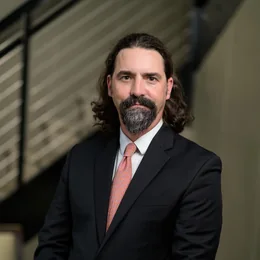
Sean handles the firm’s immigration work: family-based petitions, employment visas, removal defense and humanitarian relief including asylum and waivers. He earned his Juris Doctor at Elon University School of Law in 2021.
- Family-based petitions and adjustment of status
- Employment-based visas
- Removal and deportation defense
- Humanitarian relief, asylum and waivers
 Chad D. GarrettFounder
 Jason AycothPartner
 Sean OlsonPartner
 Brandon GoldsboroughCriminal Defense
 Stephanie GoldsboroughCriminal Defense
 Rebecca ElliottCriminal Defense
 Patrick BidwellCriminal Defense
 Samantha HeplerCriminal Defense
What clients say
4.9 out of 5 from 587 Google reviews. A few recent ones:


Where we practice
Our office is at 317 South Greene St, Greensboro, NC 27401. We help crime victims in Greensboro, High Point and across Guilford County. U visa petitions are federal filings, so we can also help clients elsewhere in North Carolina. For other humanitarian options, see our humanitarian immigration page, VAWA self-petitions and family-based immigration. Back to the immigration lawyer overview.
Guilford County: Greensboro · High Point · Jamestown · Gibsonville · Summerfield · Oak Ridge · Pleasant Garden · Stokesdale · Whitsett · McLeansville · Sedalia
Also serving: Randolph, Forsyth, Alamance, Rockingham and Davidson Counties
Questions people ask
Do I need a police report to get a U visa?
You need a signed certification on Form I-918, Supplement B, from an official investigating or prosecuting the crime, under 8 U.S.C. 1184(p)(1). A report is usually how that starts. A lawyer can help you request the certification from the right office.
Does the person who hurt me have to be convicted?
The statute requires that you were a victim of qualifying criminal activity and were, are or are likely to be helpful. It does not list a conviction as a requirement in 8 U.S.C. 1101(a)(15)(U)(i).
How long is the certification good for?
Under 8 CFR 214.14(c)(2)(i), it must be signed within the six months immediately before you file Form I-918.
Can my children get U visas too?
Yes, if they qualify. Children can receive derivative status under 8 U.S.C. 1101(a)(15)(U)(ii) through Form I-918, Supplement A.
How many U visas are given each year?
The cap is 10,000 principal U visas per fiscal year under 8 U.S.C. 1184(p)(2)(A). Family members do not count toward it.
Can I work while I wait?
USCIS may grant work authorization to anyone with a pending, bona fide U petition under 8 U.S.C. 1184(p)(6). While on the waiting list, USCIS may also authorize employment in its discretion under 8 CFR 214.14(d)(2).
I have a criminal record. Can I still apply?
Often, yes. USCIS can waive most grounds of inadmissibility for U applicants under 8 U.S.C. 1182(d)(14) through Form I-192. How the waiver is argued matters.
Will the person who hurt me find out?
Federal law limits disclosure of information about your application under 8 U.S.C. 1367(a)(2). There are exceptions, and a lawyer can explain them for your case.
When can I get a green card?
After at least 3 years of continuous physical presence in U status, if the other conditions in 8 U.S.C. 1255(m) are met.
Is a U visa the same as a T visa?
No. A T visa is for victims of human trafficking. Some people qualify for both, and we review both options.
Talk to a lawyer today
Garrett, Walker, Aycoth & Olson, Attorneys at Law
317 South Greene St, Greensboro, NC 27401
(336) 379-0539 · answered live, 24 hours
Free consultation · Se habla español
This page explains federal immigration law in general terms as of November 2026, including 8 U.S.C. 1101(a)(15)(U), 1182(a)(3)(E), 1182(a)(9)(B), 1182(d)(14), 1184(p), 1255(m) and 1367, and 8 CFR 214.14. It is not legal advice about your case, and laws and procedures change. Talk to a lawyer about the facts of your situation.